Bathing your pet might seem like a straightforward task, but how often should you actually bathe your pet? Different animals have very different grooming needs, and within each species, breed-specific characteristics like coat type, skin condition, and even activity level can determine the ideal bathing schedule. Pet parents often struggle to find the balance between cleanliness and protecting their pet’s natural oils, especially with so many grooming products available, from medicated shampoo to hypoallergenic options. Let’s explore what affects bath time for pets and how to do it right.
Why Bathing Frequency Matters
Too much bathing can strip a dog’s coat of essential natural oils, leading to dry skin, irritation, and even worsening of existing skin problems. On the other hand, infrequent washing might cause odor, matting, or aggravate conditions like allergies. Bathing is not just about appearance; it affects comfort, skin health, and even shedding patterns.
Factors to Consider
1. Species Differences
Cats are generally self-cleaning and rarely need baths unless they have gotten into something sticky or toxic. Dogs, however, require more frequent attention, particularly depending on their coat characteristics and outdoor activity.
2. Coat Type and Length
The coat type and coat length of a dog are major factors in determining its ideal bathing schedule. Short-haired breeds like Beagles may only need a bath every couple of months, while long-haired or double-coated breeds like Golden Retrievers may benefit from a monthly wash to manage shedding and dirt. Thick-coated breeds such as Siberian Huskies have unique grooming needs. They don’t emit strong odors and should not be over-bathed, as their dense undercoat relies on natural oils for protection.
3. Skin Condition and Health
Pets with sensitive skin or chronic skin problems may need special care. A veterinarian may recommend a medicated shampoo to treat conditions like dermatitis, fungal infections, or parasites. In such cases, bathing may need to be more frequent, using carefully selected products like hypoallergenic shampoo or prescription washes.
4. Activity Level and Environment
If your dog enjoys romping in muddy parks or swimming in lakes, more frequent bathing may be necessary. Indoor pets, on the other hand, often require less cleaning.
How Often Is Too Often to bathe your pet?
For most healthy dogs, bathing once every 4–6 weeks is generally appropriate. However, bathing more often than once a week can cause skin irritation unless using a gentle dog shampoo formulated for frequent use. Golden Retrievers, for example, benefit from monthly baths to maintain their thick, water-repellent coat. Siberian Huskies, with their clean, double-layered coat, usually do best with a bath only every few months.

Why Some Dogs Resist Bath Time
If your dog dreads bath time, they are not alone. Being confined in a small space like a bathtub can trigger a survival-like fight-or-flight response. Although many dogs enjoy playing in water on their own terms, being placed into it forcibly is a different experience. Stress hormones can be released, turning the bath into something traumatic rather than routine. The unfamiliar scent of shampoo and conditioner may also overwhelm a dog’s sensitive nose and add to their discomfort. Using treats as positive reinforcement and keeping sessions calm and brief can help your dog gradually become more comfortable with bath time.
Tips for a Healthy Bath Time
- Use lukewarm water and a shampoo suited for your dog’s coat type. Never use human shampoo, as it can upset the pH balance of a dog’s skin.
- Conditioner is optional but helpful for dogs with thick or long coats, as it can soften fur, reduce tangles, and make brushing easier. Look for a pet-specific conditioner or a combined shampoo-and-conditioner product.
- Brush your dog before the bath to remove tangles. Depending on breed, a bristle brush, wire pin brush, or slicker brush may work best.
- Rinse thoroughly to prevent residue that could cause skin irritation.
- Dry completely, especially for long-coated breeds, to avoid trapped moisture that can lead to fungal issues.
- Use a drain block to prevent pet hair from clogging your pipes, and avoid filling the tub too high since your dog’s movement will displace water.
- Consider regular brushing in between baths with de-shedding tools to minimize dirt and hair buildup.
When to Call in a Professional Groomer
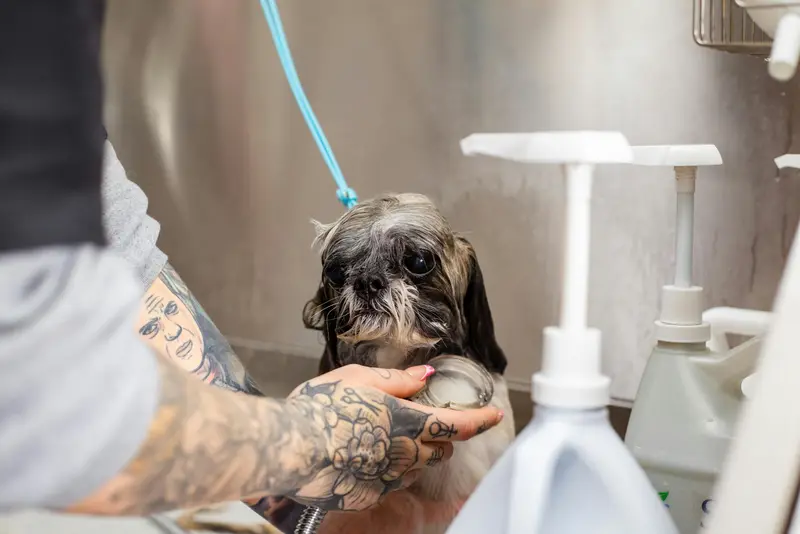
Some breeds require expert grooming techniques, especially those with thick or curly coats. A professional groomer can trim, brush, and bathe your pet appropriately and spot potential skin conditions before they worsen. It may be useful to hire a professional groomer if you live in a smaller apartment without ample space to bathe your pet. Read more about caring for pets in smaller spaces here!
Final Word for Dog Owners
Every dog is different. Your neighbor’s Chihuahua may need a different grooming routine than your Golden Retriever. The key is to observe your pet’s behavior and condition, consult your vet for any recurring skin problems, and build a bathing schedule that works for your pet’s needs, not just your preferences. By respecting your dog’s coat and skin condition, pet parents can ensure that bath time supports both hygiene and overall well-being.