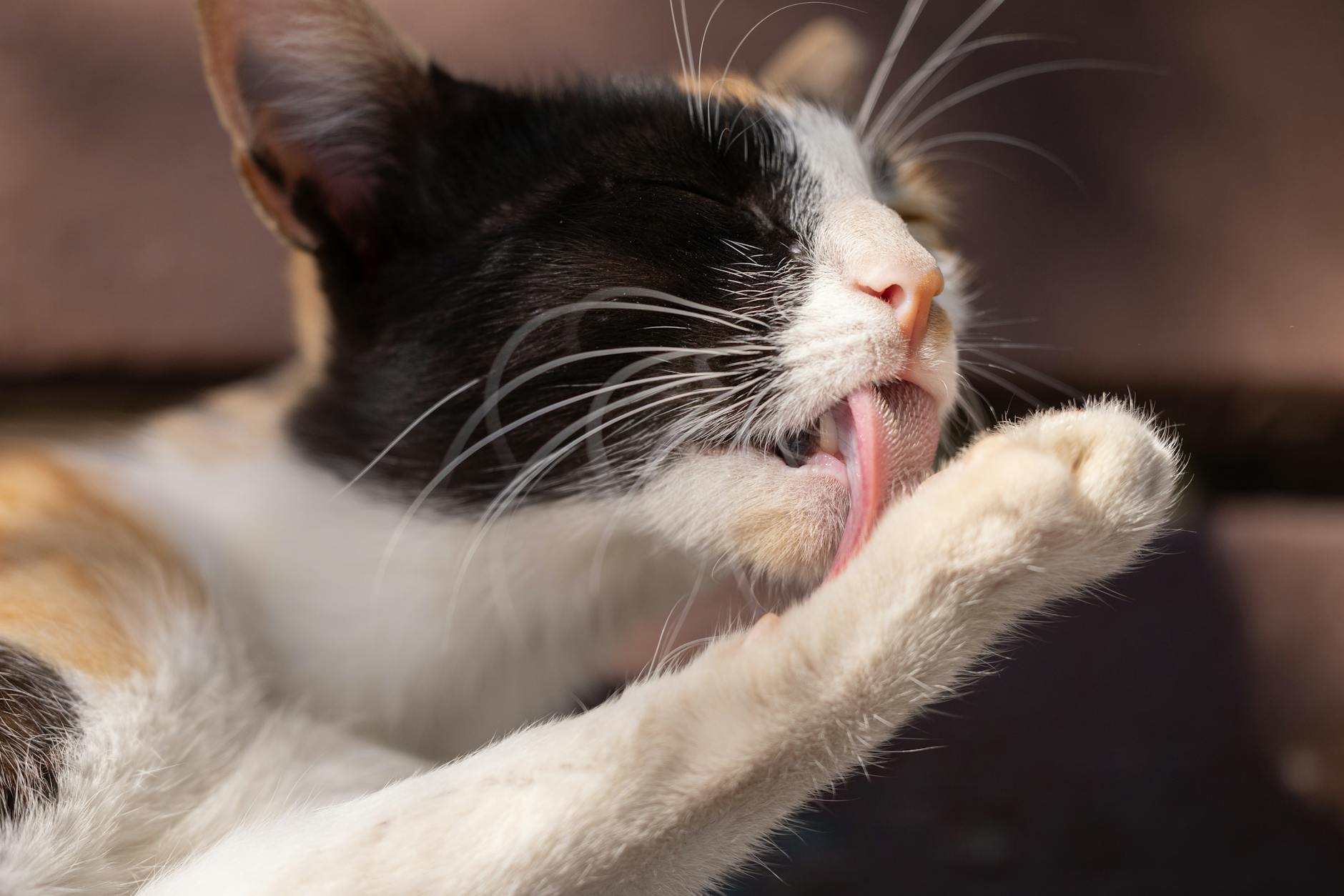
If you’ve noticed your cat licking, biting, or grooming themselves excessively, you’re not alone. Cat overgrooming is a common concern among pet owners and can signal underlying health or behavioral issues. While grooming is a natural and healthy behavior, too much of it can lead to hair loss, skin irritation, and discomfort.
In this guide, we’ll explore the main causes of why cats overgroom, including stress, allergies, and skin conditions, and what you can do to help your cat feel better.
What Is Cat Overgrooming?
Cats are naturally clean animals, often spending up to 30–50% of their day grooming. However, excessive grooming in cats goes beyond normal behavior.
Signs of overgrooming include:
- Bald patches or thinning fur
- Red, irritated, or inflamed skin
- Frequent licking or chewing in one area
- Hairballs more often than usual
- Changes in behavior (hiding, irritability)
If you notice these symptoms, it’s important to investigate the root cause.
1. Stress and Anxiety in Cats
One of the most common causes of cat overgrooming is stress.
Cats are sensitive creatures, and even small changes in their environment can trigger anxiety. Grooming releases endorphins, which can temporarily calm them, making it a coping mechanism.
Common stress triggers:
- Moving to a new home
- New pets or family members
- Changes in routine
- Loud noises or construction
- Lack of stimulation or boredom
How to reduce stress:
- Maintain a consistent daily routine
- Provide hiding spots or quiet spaces
- Use interactive toys and enrichment activities
- Consider pheromone diffusers
In severe cases, stress-related overgrooming may become compulsive and require professional help.
2. Allergies in Cats
Allergies are another major cause of excessive grooming in cats.
When cats experience allergies, their skin becomes itchy, leading them to lick or bite excessively to relieve discomfort.
Types of allergies:
- Flea allergies (very common)
- Food allergies (chicken, dairy, grains)
- Environmental allergies (pollen, dust, mold)
Symptoms to watch for:
- Intense itching or scratching
- Red or inflamed skin
- Ear infections
- Sneezing or watery eyes
Treatment options:
- Flea prevention treatments
- Hypoallergenic diets
- Antihistamines or vet-prescribed medications
Identifying the source of the allergy is key to stopping the cycle of overgrooming.
3. Skin Conditions and Medical Issues
Sometimes, cat overgrooming is linked to underlying medical conditions.
Common skin-related causes:
- Dermatitis
- Fungal infections (like ringworm)
- Parasites (mites, fleas)
- Dry skin or infections
These conditions often cause discomfort or pain, prompting your cat to groom excessively in affected areas.
Warning signs of medical issues:
- Open sores or scabs
- Unusual odors from the skin
- Persistent redness or swelling
- Sudden hair loss
If you suspect a medical issue, consult a veterinarian promptly for diagnosis and treatment.
4. Behavioral and Compulsive Grooming
In some cases, overgrooming becomes a learned behavior.
Cats may start grooming due to stress or irritation, but over time it turns into a habit, even after the original cause is gone. This is known as psychogenic alopecia.
Signs of compulsive grooming:
- Repetitive licking in the same spot
- Grooming during calm or idle moments
- No visible skin issues
How to help:
- Increase environmental enrichment
- Provide puzzle toys and climbing spaces
- Spend more interactive time with your cat
- Consult a vet or animal behaviorist
How to Prevent Cat Overgrooming
Prevention focuses on addressing both physical and emotional needs.
Simple prevention tips:
- Keep up with regular flea prevention
- Feed a balanced, high-quality diet
- Schedule routine vet check-ups
- Provide mental stimulation and playtime
- Reduce environmental stressors
Creating a calm, enriching home environment can significantly reduce the likelihood of overgrooming.
When to See a Veterinarian
While occasional extra grooming isn’t always a concern, persistent symptoms should not be ignored.
Seek veterinary care if:
- Hair loss becomes noticeable
- Skin appears damaged or infected
- Grooming interferes with daily activities
- Symptoms worsen over time
Early intervention can prevent more serious health problems and help your cat recover faster.
Conclusion
Understanding why your cat is overgrooming is the first step toward helping them feel better. Whether the cause is stress, allergies, or a skin condition, identifying the root issue allows you to take the right action.
By paying attention to changes in behavior and maintaining regular care, you can protect your cat’s health and ensure they stay comfortable, happy, and well-groomed without overdoing it.