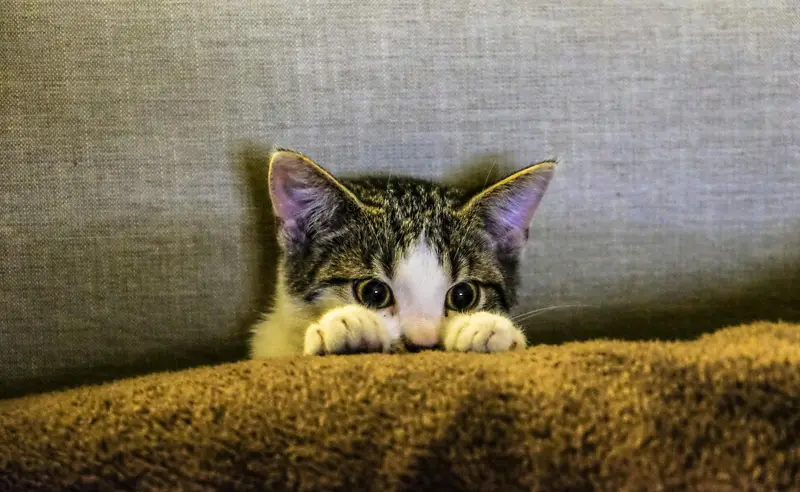
Some cats don’t just live with you. They supervise you. If your cat follows you from room to room, watch you brush your teeth, and act personally offended if you close the bathroom door, you’re not alone. Most of the time, this is normal feline behavior. It can also be your cat’s way of asking for something, like play, food, comfort, or help with a health issue. Let’s break it down.
Why your cat follows you everywhere
- You’re their safe place: Cats bond with people. If you’re the one who feeds them, plays with them, and makes them feel secure, you’re their favorite “home base.”
- You’re predictable, and cats love routines: Cats notice patterns. If your morning routine often ends with cat food, a snack, or attention, your furry friend learns, “Follow the human, good things happen.”
- They want a play session: Some cats follow because they’re bored. A short play session can go a long way. A wand toy, a tossed crinkle ball, or a quick chase game can help.
- They want social interaction: Cats don’t always show love like dogs do, but many enjoy company. Following can be a simple way to stay connected, especially in quieter homes.
- Your cat is reading your body language: Your cat watches you closely. Your footsteps, tone, and habits become signals. If your cat learns that your body language means “kitchen time” or “couch snuggles,” they’ll trail you like a tiny detective.
Why the bathroom, specifically
Bathrooms are full of “cat attractions”:
- Interesting smells and sounds
- Small space, which can feel safe
- Water, like a dripping faucet or shower
- A door that closes, which makes it more exciting
Also, some cats just want to guard you. In cat logic, you’re sitting down and trapped. Clearly you need protection!
When clingy can mean stress or anxiety
Cats can get stressed by changes, even ones that seem small to us. Stress can affect feline behavior, and sometimes it shows up as extra following, extra vocalizing, or new habits.
This can look like:
- More neediness
- Hiding, then suddenly “Velcro-cat” behavior
- Overgrooming
- Scratching furniture more than usual
In multi-cat homes, stress can also come from tension between feline friends. Even if your cats seem “fine,” small conflicts inside family units can stack up over time.
If anxiety seems likely, tools like more enrichment, predictable routines, and sometimes a pheromone diffuser can help some cats feel calmer.
When it could be a health problem
This part matters most: a sudden behavior change can be a clue.
Watch for urinary tract signs
If your cat is following you to the bathroom and also showing frequent urination, straining, crying in the litter box, peeing outside the box, or licking their private area, think urinary tract. This can be urgent, especially in male cats.
Watch for digestive tract and bowel movement changes
If your cat is clingier and also has vomiting, diarrhea, constipation, or blood in stool, it may point to the digestive system. Some vets use poop scoring charts (similar to the Bristol stool chart idea in people) to describe stool consistency and track changes.
Ongoing gut issues can have many causes. Inflammatory bowel disease in cats is sometimes compared to Crohn’s disease in people. Irritable bowel syndrome is a people term, but the bigger point is this: stress and the gut often affect each other.
That’s part of what people mean by the gut-brain axis. In simple terms, the brain and the gut send signals back and forth. Stress hormones can change digestion, and stomach trouble can affect mood and behavior. The gut microbiome may play a role too, although research is still evolving.
GI Issues
Severe GI problems can sometimes lead to serious signs like weight loss, ongoing blood in stool, or straining that does not stop. Very rarely, things like rectal prolapse or colorectal cancer can be involved. Most clingy cats do not have these problems, but if you see big symptoms, don’t wait.
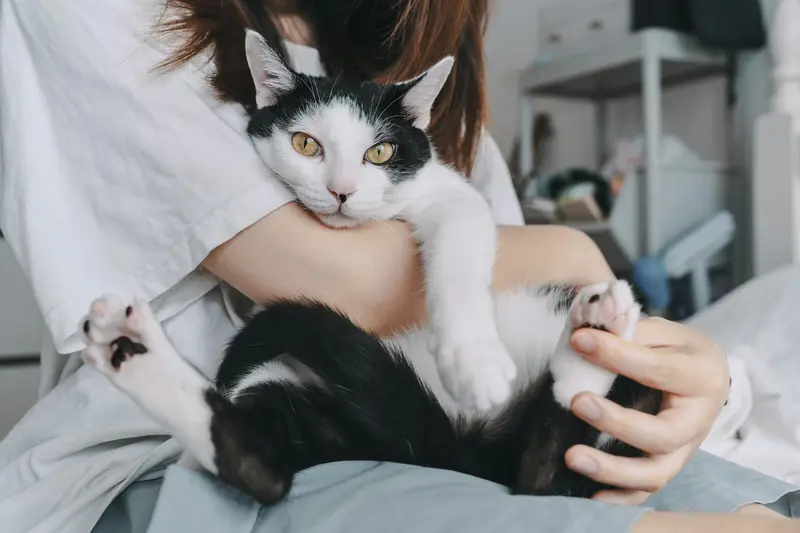
What to do if your cat is a “shadow cat”
Start with simple, cat-friendly fixes:
Give them better “jobs”:
- Puzzle feeder meals (even once a day helps)
- Hide small portions of food for a gentle “hunt”
- Rotate interactive toys so they feel new again
Give them proper scratching options:
- A sturdy scratching post
- A cat tree near a window (great for climbing and “bird TV”)
- A cozy perch in the room you use most
Build a routine:
Cats feel safer when life is predictable: meals, play, quiet time, sleep.
If anxiety seems likely:
For some cats, pheromone diffuser products and behavior plans can help. In tougher cases, vets may recommend behavior-focused treatment plans, including cognitive behavioural therapies techniques (think: gradual training and changing triggers) along with medical support when needed.
Breed note: some cats are just built clingy
Any cat can be a shadow. But some cat breeds are known for being extra people-focused, like the Maine Coon. Even then, a big change from “independent” to “attached to your ankle” is still worth paying attention to.
Final thoughts
A cat that follows you everywhere is often showing trust, curiosity, and a desire to be near their favorite person.
The main thing to watch is behavior changes. If the clinginess is sudden, or it comes with frequent urination, digestive tract issues, odd bowel movements, weight loss, or any other health problems, get a vet involved. If you want a faster first step, an online vet visit can help you figure out whether it sounds urgent and what to do next.
Further information
https://www.aspca.org/pet-care/cat-care/feline-diy-enrichment
https://www.animalhumanesociety.org/resource/seven-enrichment-ideas-keep-your-indoor-cat-entertained