
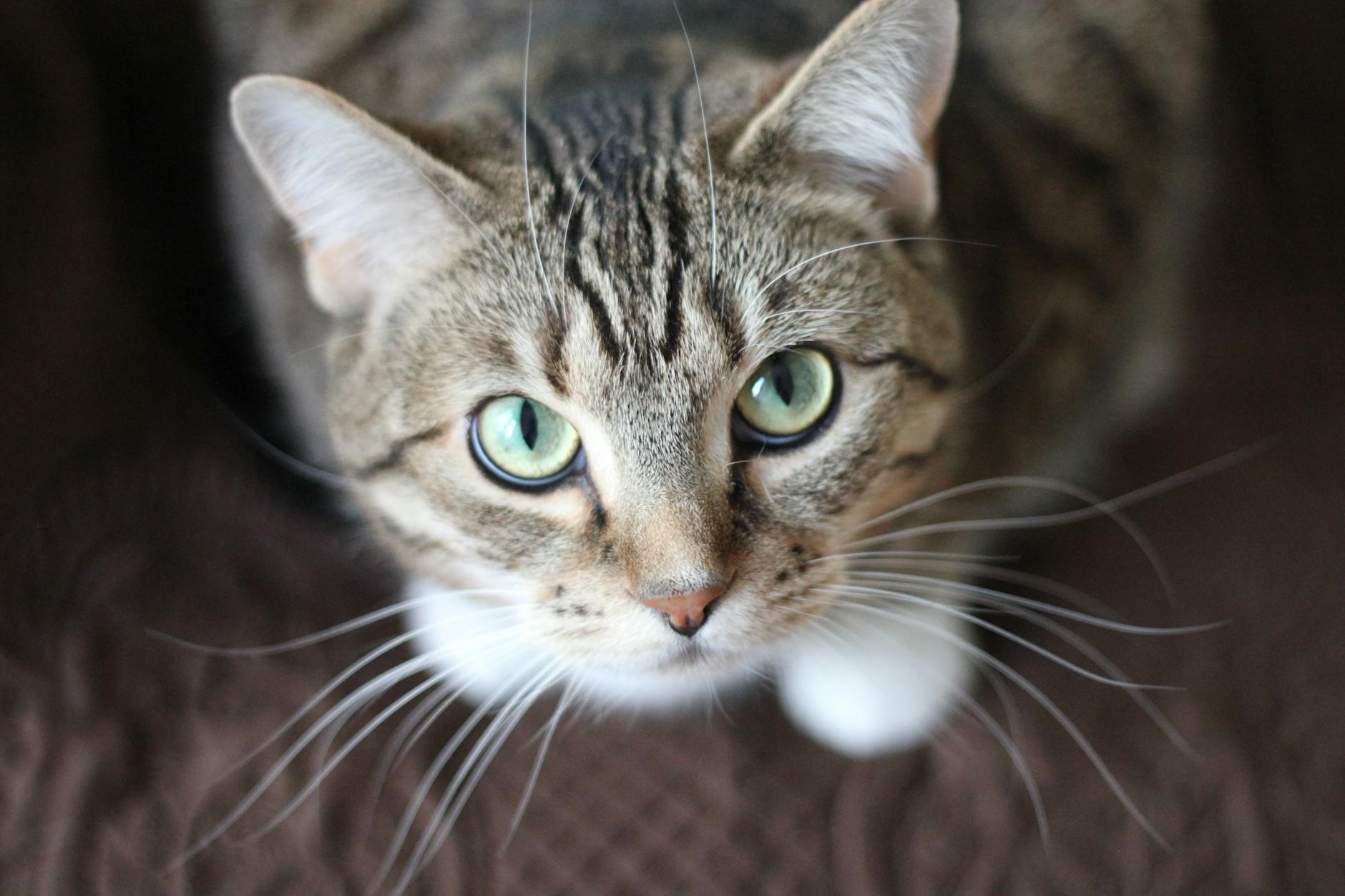
Cats are known for being mysterious and independent creatures, often leaving their human companions perplexed by their behavior. While your cat might not speak our language, they communicate with through a sophisticated system of body language, facial expressions, and vocalizations. Understanding your cat’s body language can help you better meet their needs, strengthen your bond, and even prevent stress or discomfort. In this guide, we’ll explore the key signals your feline friend uses to convey their emotions, needs, and desires.
1. Tail Position: The Emotional Barometer
A cat’s tail is one of the most expressive parts of its body and can provide valuable insights into its emotional state.
- Upright Tail: A straight-up tail, often with a slight curve at the tip, is a sign of trust and confidence. Cats in this posture are usually in a good mood and are open to interaction. An upright tail is a welcoming gesture, often seen when a cat greets its favorite person or another feline friend.
- Puffed-up Tail: When a cat has a puffed-up tail, it typically indicates fear or arousal. This behavior is a defensive mechanism, designed to make the cat appear larger in the face of a perceived threat. It’s often accompanied by a hunched back and flattened ears.
- Twitching Tail: A rapidly twitching tail, especially at the tip, can signal irritation or agitation. If your cat’s tail is twitching, it’s best to give them some space as they may not want to be disturbed.
- Tucked Tail: When a cat tucks its tail under its body or wraps it around itself, this is a sign of submission, fear, or insecurity. Cats in this posture are trying to make themselves appear smaller, signaling vulnerability or discomfort.
2. Ears: Listening for Clues
A cat’s ears are like radar dishes, constantly moving and adjusting to capture sounds. Their positioning can also reveal a lot about their mood.
- Erect Ears: Ears pointing forward indicate a curious and alert cat. They’re tuned into their environment and ready to explore or engage with whatever has captured their attention.
- Flattened Ears: When a cat’s ears are pinned back against their head, it signals fear, anxiety, or aggression. This defensive posture often accompanies hissing, growling, or puffed fur. It’s a clear warning that the cat feels threatened and may act out if pushed further.
- Swiveling Ears: If a cat’s ears are constantly rotating or flicking, they’re likely on high alert. Cats with swiveling ears are listening carefully to sounds in their environment, indicating nervousness or anticipation.
3. Eyes: The Windows to Their Soul
A cat’s eyes can convey a range of emotions from contentment to fear.
- Slow Blinking: When a cat looks at you and slowly blinks, it’s often referred to as a “cat kiss.” This behavior indicates trust and affection. You can reciprocate by slow-blinking back at them, which mimics this feline-friendly gesture.
- Dilated Pupils: Dilated (large) pupils can indicate several things depending on the context. If a cat’s pupils are large while they’re playing, it usually signals excitement or arousal. However, in a stressful situation, dilated pupils might indicate fear or aggression.
- Narrowed Eyes: Squinting or narrowing of the eyes can suggest contentment, especially if paired with purring or kneading. However, if a cat is glaring with narrowed eyes and tense body language, it might be a sign of aggression or wariness.
4. Purring: More Than Just Happiness
Purring is one of the most recognizable sounds a cat makes, but it doesn’t always mean your cat is happy.
- Contentment Purring: A steady, rhythmic purr usually indicates that your cat is relaxed and content. You’ll often hear this when your cat is being petted or cuddled in their favorite spot.
- Stress Purring: Cats may also purr when they’re in pain or stressed. This is believed to be a self-soothing mechanism. If your cat is purring while displaying other signs of discomfort, such as hiding or refusing to eat, it might be time to consult a vet.
5. cat Whisker Position: A Fine-Tuned Sensor System
Whiskers are more than just adorable—they’re essential tools that help cats navigate their world.
- Forward-Pointing Whiskers: When a cat’s whiskers are pointing forward, it usually means they’re curious or in hunting mode. You might notice this when they’re stalking a toy or investigating a new object.
- Relaxed Whiskers: Whiskers in a neutral position, slightly to the side, indicate that your cat is calm and relaxed. This is often accompanied by a loose posture and half-closed eyes.
- Pulled-Back Whiskers: Whiskers pulled back tightly against the face signal fear or aggression. This, combined with a stiff body posture and wide eyes, is a sign your cat feels threatened.
6. Kneading: A Throwback to Kittenhood
Kneading, where cats rhythmically push their paws into soft surfaces (or your lap), is a comforting behavior rooted in kittenhood. This behavior is believed to stem from the actions kittens perform while nursing. Adult cats knead when they are feeling safe and content, making it one of the most affectionate gestures you can witness.
7. cat Arching and Stretching: Signs of Confidence
When your furry friend stretches or arches its back in front of you, it’s a sign that they feel confident and secure in your presence. Stretching, in particular, is an indication that they’re comfortable in their environment and feel safe enough to let their guard down. An arched back during play might signal excitement, but if accompanied by puffed fur, it could also indicate that they feel threatened.
8. cat Vocalizations: Beyond the Meow
Cats have a variety of vocalizations, each with its own meaning:
- Meowing: Adult cats meow almost exclusively to communicate with humans. Each cat develops its unique range of meows to express hunger, affection, or to get attention. Excessive meowing can sometimes be a sign of loneliness or boredom.
- Hissing and Growling: These sounds are clear signs of distress or aggression. If your cat is hissing or growling, they feel threatened and are warning you to back off.
- Chirping and Trilling: These sounds, often heard when cats are excited or watching birds, can indicate playfulness or anticipation. Trilling, which sounds like a rolling “R,” is usually a sign of greeting or affection.
Conclusion
Understanding cat body language is key to building a stronger relationship with your feline friend. Whether through the position of their tail, the arch of their back, or a slow blink, cats are constantly communicating with us. By paying close attention to their signals, you’ll not only improve your bond but also ensure that your cat’s needs are being met.
By having a better interpretation of cat body language, you can better understand your cat’s mood, comfort levels, and needs, which leads to a happier, healthier feline companion.