
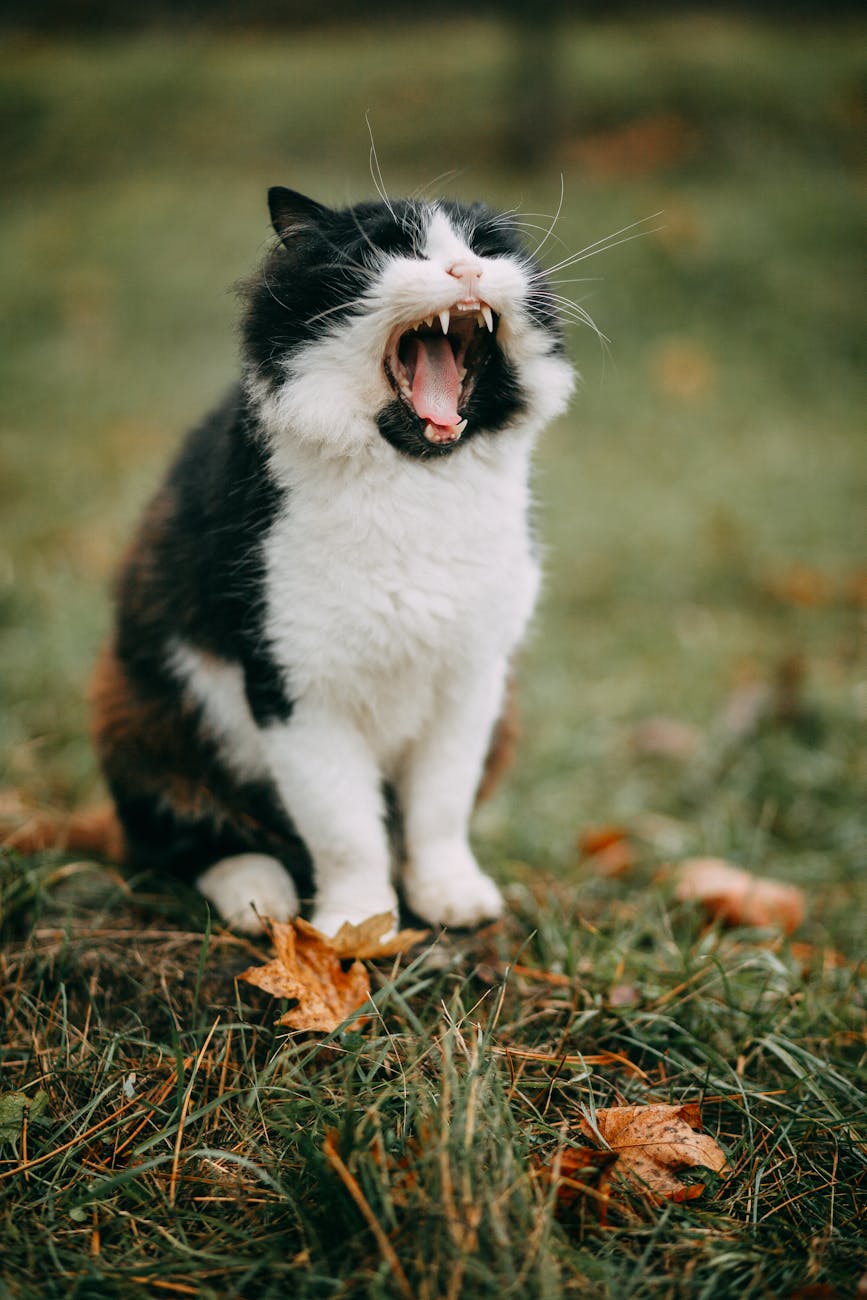
Cats may not speak human language, but they are far from silent. From soft purrs to sharp meows and surprising chirps, your feline companion has a wide range of cat sounds that communicate their needs, emotions, and instincts. Understanding these noises along with your cat’s body language, facial expression, and body postures can help strengthen the bond you share and give you a deeper appreciation of feline behavior.
In this article, we’ll explore the fascinating world of cat communication, uncovering what your cat is really saying through meows, chirps, purring, and chatter.
Why Do Cats Meow?
One of the most common cat noises you’ll hear is the meow. Unlike many animals, cats primarily use meows to communicate with humans, not each other. While kittens meow to their mothers for attention, adult cats have evolved to use their vocal chords in ways that mimic tones of human language, which is a form of adaptation in animal behavior.
Common Reasons Cats Meow:
- Attention seeking: A short, repetitive meow often means your cat wants food, play, or affection.
- Greeting: Many cats meow when you walk through the door as their way of saying “hello.”
- Discomfort or illness: A prolonged, low-pitched meow can indicate pain or medical issues.
- Territorial concern: A sharp, insistent meow may happen when your cat feels their space is being threatened, especially if another cat or unfamiliar animal is nearby.
Interestingly, female cats often use more frequent and varied meows, especially during mating seasons, to signal availability to potential partners.
Chirps and Trills: Social Cat Sounds
If you’ve ever heard your cat make a quick chirping or trilling sound, you may have been surprised. These cat sounds are typically friendly and social. Mother cats often chirp at their kittens to guide them, while adult cats may trill at humans or other pets as a way of saying “follow me” or “pay attention.”
Chirping as a Form of Cat Communication
- Friendly interaction: A chirp directed at you often means your cat is happy to see you.
- Encouragement: A trill may be your cat’s way of urging you toward their food bowl or favorite spot.
- Bonding behavior: Cats sometimes chirp at other cats they trust, signaling comfort and camaraderie.
Chirps are usually accompanied by open, relaxed body postures and positive facial expressions, further showing that your cat feels safe and connected.
Cat Chatter: The Hunting Instinct Revealed
One of the most fascinating cat noises is chatter. This rapid clicking or chattering sound often happens when a cat sees birds or squirrels through the window. While it might sound funny, it has deep roots in feline hunting instincts.
Experts believe cat chatter may be:
- Frustration: Your cat may chatter when they see prey they cannot reach.
- Practice: The noise could mimic the “kill bite” used on prey, showing an instinctive preparation for the hunt.
- Communication: Some theories suggest cats chatter to express excitement or share information with others about potential prey.
Chattering is almost always paired with alert, forward-facing ears, dilated pupils, and a tense stance, all classic body language signs of hunting focus.
Purring: More Than Just Contentment
When people think of cat communication, purring is usually the first sound that comes to mind. While purring often signals contentment, such as when your cat curls up in your lap, it can mean much more.
Reasons Cats Purr:
- Relaxation: The steady vibration usually indicates comfort and happiness.
- Self-soothing: Cats may purr when stressed or in pain, as the sound has a calming effect on themselves.
- Healing: Studies show purring frequencies can stimulate tissue regeneration and bone healing.
- Bonding: Kittens purr while nursing, strengthening the bond with their mother.
If paired with soft body postures and gentle facial expressions, purring usually reflects happiness. But if your cat is hunched, hiding, or injured, purring could be a coping mechanism instead.
Cat Meow and Cat Body language: understanding communication
While cat meows and cat noises are essential to understanding your pet, sound alone doesn’t tell the whole story. To interpret what your cat really means, you must combine vocalizations with body language, facial expressions, and body postures.
Key Combinations:
- Relaxed meow + soft eyes + tail up: A friendly greeting.
- Loud, insistent meow + pacing: Demanding food or attention.
- Chirp + tail flick + leading posture: An invitation to follow.
- Chatter + crouched body + dilated pupils: Hunting instinct triggered.
- Purr + kneading + half-closed eyes: Absolute contentment.
By watching and listening, you’ll learn to distinguish between normal cat behavior and signs of distress that may require veterinary attention.
Why Understanding The Meow and other Cat Sounds Matter
Cats may not use human language, but they are highly expressive animals. Recognizing their unique cat communication not only improves your relationship but also ensures better animal care. Understanding territorial concerns, hunting instincts, and emotional needs can prevent misunderstandings and strengthen trust.
By paying attention to your cat’s vocal chords, body language, and subtle cues, you’ll be able to decode their daily messages, ranging from affectionate chirps to urgent meows.
Final Thoughts
Every cat has their own unique “dictionary” of sounds. Some are chatty, filling the house with meows and trills, while others are quieter, relying more on posture and gaze. Whether it’s the soft rumble of cat purring, the surprising chirp of affection, or the intense chatter of hunting instincts, each sound gives you a glimpse into your cat’s world.
By tuning into your cat’s vocalizations and pairing them with body postures and facial expressions, you become fluent in the special language of feline companionship. Over time, you’ll find that understanding cat behavior through sound creates a deeper, more loving bond between you and your pet. Knowing these cues can also help you build a home more suited for your pet.
further information
https://www.chewy.com/education/cat/training-and-behavior/why-do-cats-meow
https://www.hillspet.com/cat-care/behavior-appearance/cat-chirping