When it comes to training pets, dogs might be the first thing that comes to mind. However, if you think cats are untrainable, think again! Cats are often perceived as aloof and independent, but with the right approach, you can teach your feline friend tricks and behaviors that make life more harmonious for both of you. Enter clicker training—a popular method that’s as effective for cats as it is for other animals. Here’s an introduction to getting started with clicker training for your cat, including tips, tricks, and techniques that will have your kitty engaged and learning in no time.
What is Clicker Training?
Clicker training is a reward-based technique that uses a small device called a clicker, which makes a distinct “click” sound when pressed. This sound acts as a marker to let your cat know they’ve done something right, immediately followed by a reward. In essence, it’s a way to reinforce positive behaviors by making the connection between the click and a treat.
Why Clicker Training Works for Cats
Cats are motivated by rewards, just like dogs! Whether it’s their favorite treat or even playtime with a favorite toy, the right incentive can get a cat’s attention. The clicker sound serves as an immediate “yes” to let your cat know they did the correct action, which is often clearer than trying to praise them with words. With consistency, your cat will start to understand the difference between desirable behavior and bad behavior!
Getting Started with Clicker Training for Your Cat
Step 1: Choose the Right Clicker
There are different types of clickers on the market, but a basic one with a soft, consistent click sound is usually best. Some cats may be startled by loud clicks, so try to pick a quieter model or experiment with different options to see what works for your feline.
Step 2: Find the Perfect Treat
Most cats are motivated by food, but every cat has a unique taste! Experiment with small, bite-sized treats or wet food that your cat loves, such as soft training treats, pieces of cooked chicken, or even a few bites of canned tuna. Keep the treat small enough so they won’t fill up too quickly.
Step 3: “Charge” the Clicker
To teach your cat to associate the clicker sound with positive reinforcement, start by simply pressing the clicker and immediately offering a treat. Repeat this process several times over a few short sessions until your cat begins to expect a treat after hearing the click. This phase is crucial—it builds the foundation that “click = reward.”
Basic Commands to Try
Once your cat associates the clicker with treats, it’s time to start with some simple commands. Here are a few easy ones to try:
1. Sit
Hold a treat just above your cat’s head and slightly back. Cats often sit when reaching up for a treat; as soon as their rear touches the ground, click and reward. With repetition, they’ll learn that sitting on command leads to a treat.
2. Come
Start training this command when your cat is close by and interested in you. Use a happy, excited voice to call your cat’s name, and when they come to you, click and treat. Gradually increase the distance between you and your cat as they become more comfortable.
3. High Five
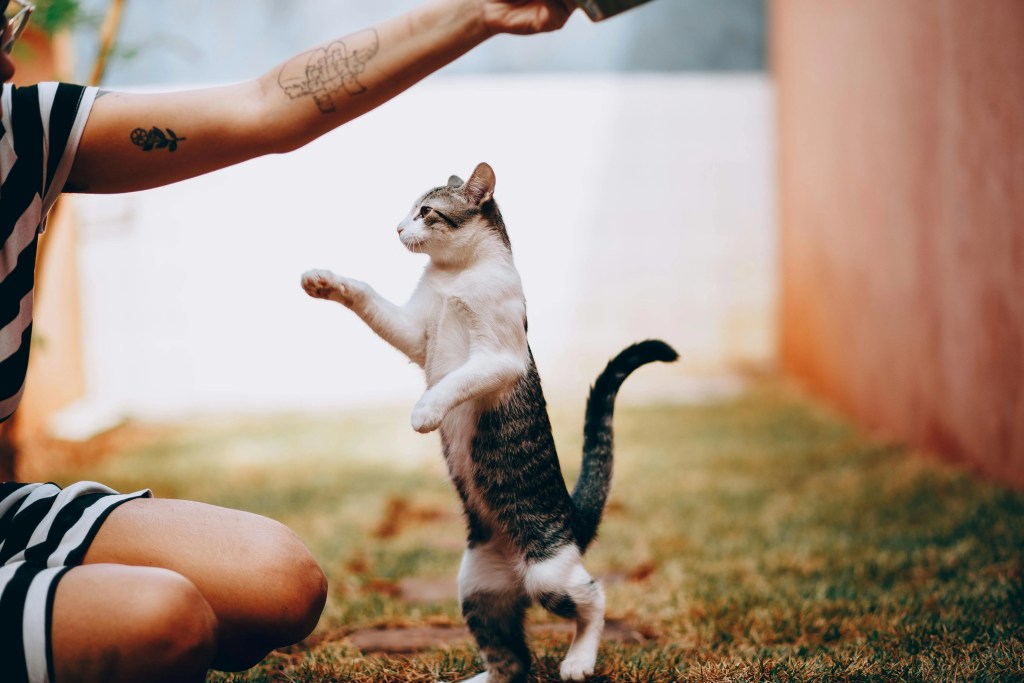
Hold a treat just above your cat’s paw so they lift it to reach. When they do, click and reward. Over time, you can start associating this action with the command “high five” or “paw.” Cats often enjoy this trick, and it can be a fun way to engage with them!
Tips for Successful Clicker Training
- Keep Sessions Short: Cats can lose interest quickly, so aim for short training sessions—about 5-10 minutes at a time.
- Train at the Right Time: Try training when your cat is naturally alert but slightly hungry. Right before mealtime is often ideal.
- Avoid Punishment: Never use the clicker as a punishment. If your cat doesn’t respond to a command, be patient and encourage them, but don’t click unless they perform the desired action.
- Consistency is Key: Try to train daily or every other day for consistent progress. Remember that training may take time—patience is crucial.
- End on a Positive Note: Always end training with a reward like a tasty treat or wet food, even if your cat didn’t quite perform as expected. This helps them associate training with positivity, and this technique is known as positive reinforcement training.
Benefits of Clicker Training for Cats
Beyond teaching tricks, kitty clicker training offers many benefits for cats. It can help reduce unwanted behaviors by redirecting their energy, strengthen the bond between you and your feline friend, and even provide mental stimulation that can lower stress and increase your cat’s confidence. Learning fun tricks in your training sessions can make the day to day more interesting too! For multi-cat households, clicker training can also help reduce aggression and create a calmer, more structured environment.
Common Challenges and How to Overcome Them
Some cats may be shy or hesitant about training at first. Start with smaller goals and ensure they are comfortable before moving forward. Also, remember that every cat is unique—some may respond immediately, while others may take more time. If your cat gets distracted or uninterested, don’t be discouraged! Training is meant to be a fun, gradual process.
Final Thoughts
Kitty clicker training your cat may seem unconventional, but with positive reinforcement through clicker training, it’s entirely possible—and rewarding! Remember that patience, consistency, and a positive attitude are the keys to success. So grab a clicker, some treats, and enjoy the journey of teaching your cat fun tricks and useful behaviors. With time, you’ll not only have a well-behaved kitty but also a stronger bond with your feline companion. Enjoy the training process! Click here to learn how to keep your pet clean and groomed after playing!