

Giving a cat medication can feel like a full contact sport. Cats are fast, strong, and highly suspicious of anything new in their mouth. The good news is that there are practical, low stress ways to give pills without getting scratched or turning your home into a wrestling ring. With the right approach and tools, medication time can become routine instead of traumatic.
Start by Understanding the Medication
Before trying anything, confirm the forms of medication your vet prescribed. Some drugs can be crushed or opened, while others must stay intact. For example, Prilosec capsules should not be crushed unless your veterinarian specifically approves it. Always ask whether the medication can be given in liquid or capsule form, mixed with food, or converted into a flavored liquid or liquid medication.
Never assume it is safe to alter a pill without guidance.
Hiding Pills in Food That Cats Actually Like
Many cats will take medication willingly if it is well hidden.
One of the easiest options is a Pill Pocket. These are soft treat products designed to wrap around pills and mask the smell. Warm it slightly in your fingers so it seals completely around the pill.
Wet food and canned food are also effective. Choose a strong smelling variety and mix in the pill or crushed medication if approved. Offer a small test bite first to ensure your cat likes it before adding the medicine.
Cream cheese can work in very small amounts, especially for pills with a bitter taste. Peanut butter is less reliable for cats and should only be used if your cat already enjoys it, since many cats dislike its texture.
Pill putty is another option similar to a Pill Pocket and can be molded tightly around tablets.
Turning Pills Into Liquids When Allowed
Some cats refuse solid medication no matter how well it is hidden. In those cases, liquid medication may be easier.
If your vet says it is safe, pills can sometimes be crushed using a pill grinder or mortar and pestle and mixed with water or a liquid treat. The mixture can then be drawn into an oral syringe or medicine dropper.
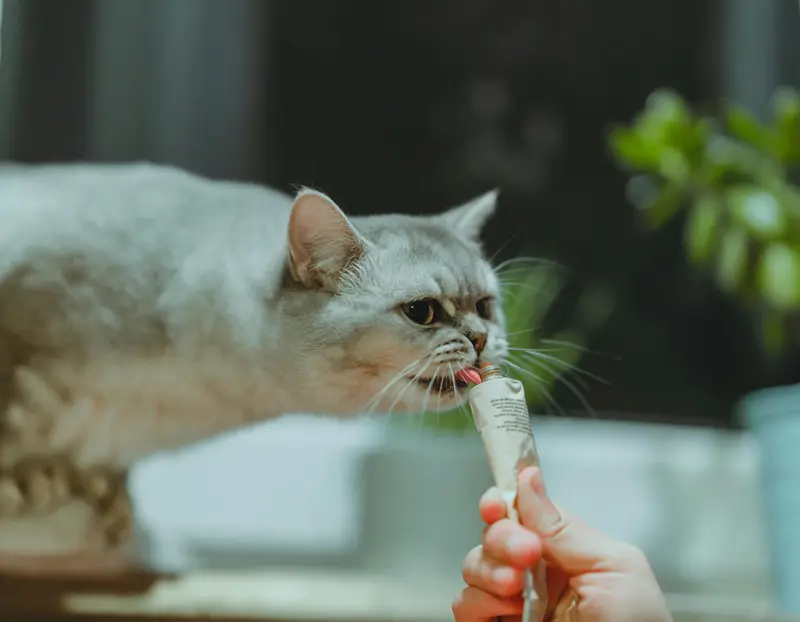
Many pharmacies can compound medications into a flavored liquid that tastes like chicken or fish. This often increases compliance significantly.
Liquid medication should be given slowly into the side of the mouth, never straight down the throat.
Using Tools Designed for Pills
When food fails, tools can help you deliver medication quickly and safely.
A pill popper, also called a pet piller or pill shooter, allows you to place the pill at the back of the tongue without putting your fingers in the cat’s mouth. This reduces the risk of bites and scratches. Some people also refer to this tool as a pill gun.
To use it, gently open the cat’s mouth, place the pill using the pill popper, close the mouth, and encourage swallowing with a light throat rub. Follow with a small amount of water using an oral syringe if your vet recommends it.
These tools take practice, so try a dry run first.
How to Restrain Without Stress
Proper restraint is about safety, not force. Wrapping your cat in a towel or blanket can keep paws contained and prevent scratches. This technique is often called a burrito wrap.
Choose a quiet space, stay calm, and speak softly. Cats pick up on tension quickly, and stress makes the process harder.
Reward your cat afterward with praise or a favorite treat, even if things did not go perfectly.
What Not to Do
Do not force a pill straight down a struggling cat’s throat with your fingers. This increases injury risk for both of you.
Do not crush medication unless explicitly approved. Some drugs are time released or irritating when crushed.
Do not mix medication into a full meal. If your cat refuses it, the dose is wasted and you will not know how much they consumed.
Do not skip doses or stop treatment early. If you are struggling, call your vet and ask about alternatives like liquid medication or Gut Restore Supplements when appropriate.
Final Thoughts
Giving pills to a cat does not have to be a nightmare. With patience, the right method, and tools like a pill popper or pet piller, most cats can be medicated safely and calmly. If one approach fails, try another and always work with your veterinarian to find the best solution for your cat.
Medication time should be boring, predictable, and drama free.