Understanding feline bites and overstimulation and responding in the right way.
You’re sitting on the couch, gently petting your cat. They’re purring, looking relaxed, maybe even melting into your lap. Then, out of nowhere, they nip your hand and dart away. What gives?
If this has ever happened to you, you’re not alone. Many cat owners have been on the receiving end of these unexpected cat love bites. And while it might feel personal, it’s usually not. Your cat isn’t trying to be mean; they’re just overwhelmed.
Let’s break down why cats bite during petting and what you can do to prevent it from happening again.
Understanding Petting-Induced Aggression or “love bites”
Cats are sensitive creatures. While some enjoy long cuddle sessions, others get overstimulated quickly. When that happens, they may react by biting—not out of anger, but as a way to say “enough.”
This behavior is known as petting-induced aggression. It happens when too much physical contact becomes uncomfortable or irritating for a cat, even if they seemed to enjoy it at first.
Imagine someone rubbing your back for too long—it might start off feeling nice, but after a while, you might want them to stop. For cats, biting is often their clearest way of saying, “Hey, I’m done here.”
Why Do Some Cats Bite When You Pet Them?
There are a few reasons your cat might go from purring to biting in seconds:
- Overstimulation: Petting can create a buildup of energy in your cat’s nerves. If that energy becomes too much, they may lash out.
- Sensitivity Zones: Some cats dislike being touched in certain spots like the belly, tail base, or back legs. Even if they tolerate it for a while, they may eventually react.
- Mixed Signals: Cats might purr while being petted but still feel uncomfortable. Purring doesn’t always mean they’re happy; it can also be a way to self-soothe.
- Past Experiences: If your cat had rough handling in the past, they may be extra sensitive or wary about touch.
The good news? You can reduce or even stop this biting behavior altogether without punishment or stress. Here’s a step-by-step approach to prevent biting during petting:
Step 1: Learn Your Cat’s Warning Signs for bites
Most cats give off little signals before they bite. You just have to pay attention to their body language and know what to look for.
Watch for signs of overstimulation:
- Tail twitching or lashing
- Ears turning sideways or back
- Skin rippling along the back
- Sudden head turns toward your hand
- Tense body or wide eyes
The moment you notice these signs of irritation, pause the petting. Give your cat a break before things escalate.
Step 2: Limit Petting Time
Some cats enjoy affection, but only in small doses. Try keeping petting sessions short and sweet.
Tips:
- Stop after 10–15 seconds, even if they seem to want more.
- Wait to see if your cat leans in again or moves away.
- Pet in calm, quiet settings where your cat feels safe.
By ending sessions before your cat gets overstimulated, you reduce the chances of a bite happening at all.
Step 3: Focus on the “Safe Zones”
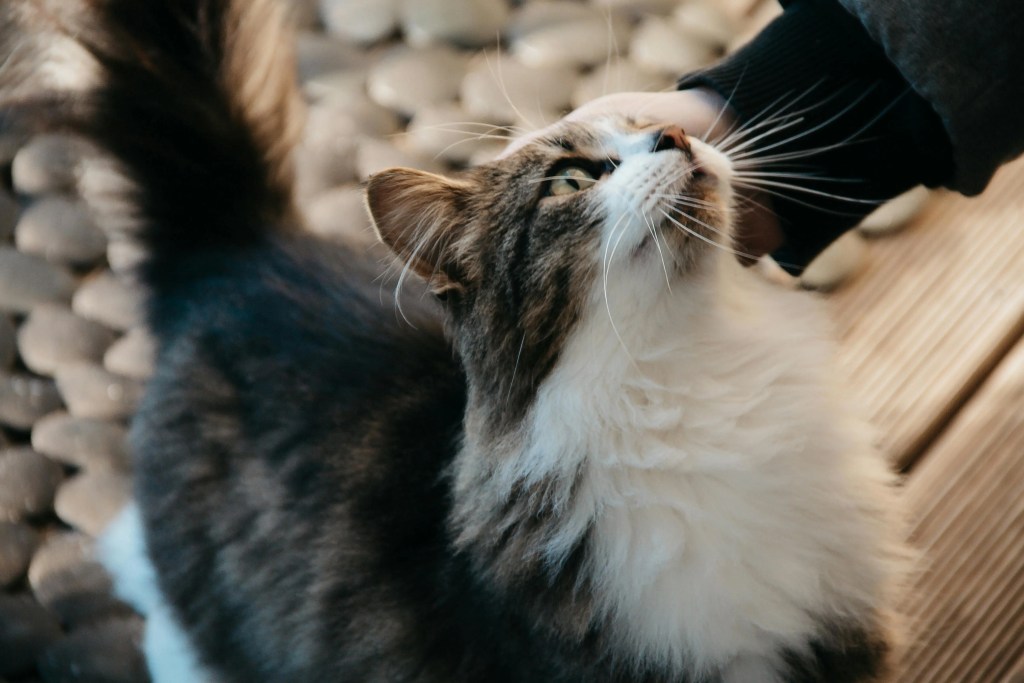
Every cat has different preferences, but most are more comfortable being touched in certain spots.
Safe petting areas usually include:
- The cheeks
- Under the chin
- Behind the ears
- The top of the head
Avoid or limit contact with:
- Belly
- Tail
- Paws
- Lower back
Start by gently petting areas your cat seems to enjoy most. If they push into your hand or purr calmly, you’re in a good spot.
Step 4: Don’t Punish the bites; Redirect
If your cat does bite, don’t yell, swat, or spray them with water. That can break trust and make your cat more anxious.
Instead:
- Calmly pull your hand away.
- Give your cat space to cool off.
- Try using a toy, like a feather wand or string, to redirect their energy in a positive way.
Cats aren’t being “bad,” they’re just communicating. It’s your job to listen and adjust.
Step 5: Build a Bond Through Play
Regular playtime helps burn off energy and builds trust between you and your cat. If your cat often bites during affection, they may need more interactive play to stay balanced.
Try this:
- Use toys that mimic prey, like mice or feathers on a string.
- Play in short bursts (5–10 minutes) a couple of times a day.
- Let your cat “catch” the toy sometimes—it builds confidence.
A tired cat is often a happier, more relaxed cat—less likely to bite during petting.
Conclusion
Cats may be mysterious, but their behavior usually makes sense when we take the time to understand it. If your cat bites during petting, it’s not a sign that they don’t love you; it just means they need a little space or a gentler touch.
By watching their signals, petting them in the right spots, and stopping before they feel overwhelmed, you’ll build a stronger, safer relationship with your cat. Over time, they’ll learn to trust you more, and you’ll learn exactly what makes them feel comfortable and cared for.
Remember: every cat has their own limits, just like people do. When you respect those boundaries, your cat will thank you, in their own quiet, whiskery way.
further information
Here’s Why Your Cat Randomly Bites You When Being Pet | PawTracks
6 Reasons Why Cats Bite Their Owners and What To Do | LoveToKnow Pets